

What Is Executive Coaching

Understanding executive coaching: how it works and why it matters
Executive coaching is a structured, 1:1 development process where a trained coach works with you on the specific challenges your role demands. Understanding what is executive coaching starts here: a good engagement changes how you think, decide, and act, with results tracked at baseline, 90 days, and 180 days.
So what is executive coaching compared to other options? It is not therapy (which focuses on emotional health and personal history), not mentoring (which provides career guidance), and not consulting (which delivers recommendations). Coaching builds your own capacity to solve the problems in front of you.
80% of coached leaders report improved self-confidence, and 70% report improved work performance (ICF Global Coaching Study, 2023). At High Performance Orgs, we measure every engagement at baseline, 90 days, and 180 days.
What is executive coaching vs. consulting, therapy, and mentoring?
People researching what is executive coaching often wonder about the differences between consulting, mentoring, therapy, Performance Improvement Plans and coaching. Here’s a direct comparison:
| Feature | Coaching | Consulting | Therapy | Mentoring |
|---|---|---|---|---|
| Focus | Your capacity to lead | Solving a specific problem | Emotional health | Career guidance |
| Who drives | You set the agenda | Consultant prescribes | Therapist guides | Mentor advises |
| Duration | 3-6 months structured | Project-based | Open-ended | Informal, ongoing |
| Outcome | Skills that compound | A deliverable | Healing and insight | Knowledge transfer |
| Accountability | Built into the process | Deliverable-based | Self-directed | Relationship-based |
A good coach works on the problems you bring, helps you recognize the patterns underneath them, and identifies the mindset shifts, new skills, or different tools you need to solve them.
70% of an employee’s engagement variance is attributable to the direct manager. And global employee engagement sits at 21%, costing $438 billion in lost productivity annually. (Gallup State of the Global Workplace, 2024) Coaching can help you build a healthier, happier, more productive and more profitable team.
Who needs executive coaching?
Most people researching what is executive coaching assume it is for leaders who are stuck. That’s backwards. Understanding what is executive coaching helps clarify who benefits most and who should look elsewhere.
The leaders who get the most from coaching are already performing. They’re capable, they’re delivering, and they can see the gap between where they are and where they want to go. Coaching is the bridge.
You’re a strong candidate if you’re a VP, C-suite leader, founder, or senior director dealing with any of these: a promotion into a larger scope of responsibility, a team that isn’t executing the way it should, high-stakes decisions with insufficient information, a pattern in how you lead that keeps creating friction you can’t diagnose, or a transition into a new role that’s moving faster than your current toolkit.
You’re also a strong candidate if you’re a high-potential manager or director preparing to move into a senior role and want to build the skills before the job demands them.
Coaching doesn’t work for everyone. If you’re required to be there, not willing to examine your own patterns, or want someone to confirm what you already believe, you’ll get limited value. Coachability is the single biggest predictor of results.
What happens in a coaching session?
A coaching session isn’t a pep talk or a therapy session. It’s structured work.
In a typical High Performance Executive Coaching session, you bring the situation you’re in: a team challenge, a decision you’re stuck on, a stakeholder issue creating friction, a pattern you keep seeing. A founder who needs to fire a co-founder. A VP who just inherited a demoralized team. A manager who can’t get your direct report to own their work. The session starts with what’s most pressing for you. From there, we work through the facts. What’s interpretation? What’s the real problem underneath the surface problem? That diagnosis is often where the biggest shift happens in a 1:1. Most leaders are solving the wrong version of the problem (or symptoms of problems).
Once the problem is defined correctly, we build the action plan for your specific situation: a conversation you need to have in your next 1:1, a decision framework to apply, the skill to develop, the boundary to set. You leave with something concrete to do, not some vague concept to think about.
Between sessions, you execute. When you come back, we debrief: what worked, what didn’t, what you learned and what’s next. That strategize-act-learn-debrief loop is what produces lasting behavior change.
What does the research say about coaching ROI?
A joint PwC and ICF study found that 87% of coaching clients report positive ROI, with a median return of approximately 7x the investment (ICF Global Coaching Study, 2024).
82% of leaders say coaching helped them develop stronger leadership skills. (ICF, Building a Coaching Culture, 2024)
(See: How Much Executive Coaching Costs)
- 80% of coached leaders report improved self-confidence
- 70% report improved work performance
- 86% report improved communication skills
- Median ROI of 7x the coaching investment
What got you here won’t get you there.
Marshall Goldsmith
What would need to be different in six months for coaching to be a worthwhile investment now?
How much does executive coaching cost?
Executive coaching fees range widely depending on the coach experience level, the depth of the methodology, and whether results are tracked with assessments. Sessions on their own run $200 to $500 per hour with no structured engagement around them. Multi-month engagements for senior leaders that include assessments, between-session accountability, and measured outcomes range from $5,000 to $50,000 or more.
At High Performance Orgs, the Leadership Accelerator is $3,500 for 12 weeks of live group coaching with 3 one-on-one sessions and lifetime access to the curriculum including all future updates. Executive Coaching is $7,500 for 4 months of 1:1 coaching across 8 structured sessions by phone. Both include baseline, 90-day, and 180-day assessments so you can see exactly what changed and decide what to focus on next.
Cost matters less than what happens without coaching. Numbers tell the story. Replacing a mid-level manager costs 50-200% of their annual salary in recruiting, onboarding, and lost output (SHRM research). A single departure that coaching prevents often pays for the full engagement several times over.
Choosing the right executive coach
Coaching is an unlicensed, unregulated profession. Anyone can use the title. Here are things to look for:
Track record at your level.
Has this coach worked with leaders at your seniority, in your type of role, dealing with challenges similar to yours? Ask directly: how many executives, VPs or senior leaders they’ve worked with, which challenges do they typically bring, which kinds and sizes of organizations have they worked with. Vague answers often mean limited experience at senior levels.
A real methodology.
The coach should be able to describe their approach clearly: structure, phases, how the engagement progresses. “I ask powerful questions and create space for reflection” describes a nice conversation. If they can’t walk you through a methodology with key milestones and how results are measured, you probably want a different coach.
Measurement.
How do they measure results? Is there any follow-up support?
Chemistry.
You need to feel the coach sees you clearly and you can trust them. You set the agenda, bring the leadership challenges you need to tackle. You should feel the coach is acting in your best interests and can quickly help you dig into, diagnose, and define the problems and create practical action plans that work in your environment.
There are more than 109,000 professional coaches worldwide, but coaching remains an unlicensed profession with no mandatory certification or standards body. (ICF Global Coaching Study, 2023) Ask for specifics. A strong track record answers directly.
You can read more about Coop’s background and approach before reaching out.
Getting the most from your coaching engagement
Bring your real problems.
The toughest, most honest version of what you’re dealing with, not the polished version you’d tell your board. Be brutally honest and you’ll get to the core issues and solve them faster.
Do the work between sessions.
Coaching sessions surface the insights and build your action plans. Your execution and behavior change happens in between coaching. Do the work to get the results.
Track what’s changing.
Ask for feedback from the people around you, your team, your direct reports, your board. We use a self-assessment across the key domains of your life and leadership to start each coaching program, so you have a clear picture of your starting point. You repeat the assessment every quarter to measure what’s changing and decide what to focus on next.
Stay in it when it gets uncomfortable.
Good coaching purposefully pushes you outside of your comfort zone. Growth comes from strategizing, pushing, informed experimenting, and learning.
Pro tip
Tell your coach when something feels off. The relationship only works if you’re willing to say “that’s not it” when it isn’t. A good coach welcomes the correction.
What framework does HPO executive coaching use?
Our High Performance Executive Coaching program and our High Performance Leadership Accelerator run on the High Performance Leadership Operating System (HPLOS): a framework developed over 27 years of coaching 3,000+ leaders and training 150,000+ employees in 37 countries, organized across three developmental arcs:
Level 1: Leading Yourself as a High Performer.
Humility, self-awareness, self-regulation, value-driven decision-making, ruthless prioritization, deep work, focused execution, strategic thinking, and the cognitive habits for high performance. Leading yourself as a high performer is the first step in building highly effective teams.
Level 2: Building and Leading High-Performing Teams.
Emotional fluency, psychological safety, team trust, brain types, team alignment, root cause problem definition, feedforward, performance conversations, and shared leadership. These skills build teams that are healthier, more aligned, and more productive.
Level 3: Influencing and Leading High-Performing Organizations.
Stakeholder mapping, effective change through influence, culture mapping, modeling values, subculture analysis, strategic storytelling, executive presence, vision crafting, and change leadership. This is the work of leaders operating across teams, functions, and levels.
The arcs are sequential by design. Skills at each level depend on what’s developed in the level before.
Which coaching option is right for you?
Now that you understand what is executive coaching and how it works, here are two programs based on seniority and complexity.
| Feature | High Performance Leadership Accelerator | High Performance Executive Coaching |
|---|---|---|
| Price | $3,500 | $7,500 |
| Format | Group coaching + self-paced curriculum | 1:1 coaching |
| Duration | 12 weeks (12 weeks) | 4 months (16 weeks) |
| Sessions | 12 weekly group sessions + 3 individual coaching sessions at key milestones | 8 bi-weekly sessions |
| Who it’s for | Managers, directors and high-potentials | Founders, executives, vps and senior leaders |
| Measurement | Baseline, 90 days and 180 days | Baseline, 90 days and 180 days |
| Lifetime access | Yes, to class materials (including upgrades) |
High Performance Leadership Accelerator
For managers, directors, and high-potentials: High Performance Leadership Accelerator (HPLA) is built for leaders who are making decisions without a framework. 12 weeks of live group coaching sessions, lifetime access (including upgrades) to self-paced curriculum covering every HPLOS skill, 3 individual coaching sessions at key milestones. $3,500.
High Performance Executive Coaching
For founders, executives, VPs, and senior leaders: High Performance Executive Coaching (HPEC) uses the same HPLOS frameworks customized for the unique stressors and realities of senior leadership. Every session focuses on what you’re dealing with: the strategic decisions, the team challenges, the stakeholder issues, the things keeping you up at night. Four months, 8 sessions, by phone. $7,500.
What coached executives say
“From all his reps working with early stage startups, Coop has incredible pattern recognition on everything we have run into. He can speak with a high level of detail towards what has worked and hasn’t worked at other companies, and can abstract away overarching principles to navigate virtually any situation.”

Nate Robert
Cofounder & CEO, Baton
“Coop’s coaching was invaluable in helping me work through many challenges and opportunities that came out of this period of growth. He provided clear insights, tools, and frameworks that were consistently actionable. He strikes the right balance between being supportive and challenging, and regularly kept me accountable and pushed me to always handle difficult items directly and effectively.”

Chris Akhavan
Chief Revenue Officer, Glu Mobile
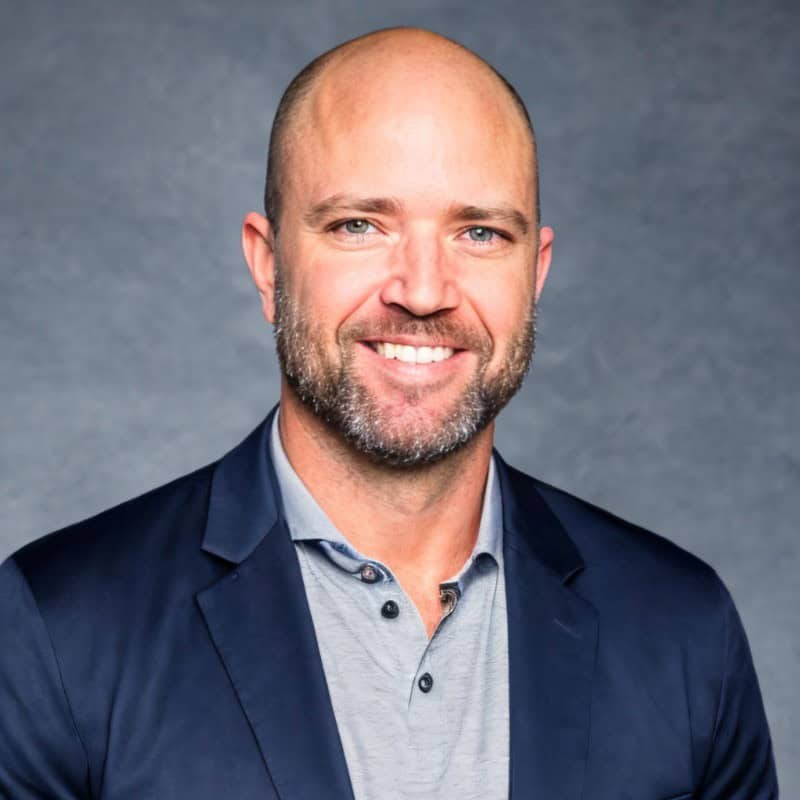
“I learned new skills like human-centric leadership, psychological safety, vulnerability in leadership, feedforward, and others that are extremely important to build a strong company culture.”
Rafael Granato
Vice President of Marketing, 11Sight
The executive coaching starter guide
What coaching is, what it costs, how to evaluate coaches, and how to get your company to fund it. Everything in one place.
For Founders, Executives, VPs & Senior Leaders
Deliver better results, faster
Free 55-minute coaching session on your toughest leadership challenges. You’ll know within the hour whether this is the right fit. Not a sales pitch.
For Managers, Directors & High-Potentials
Upgrade your Leadership Operating System
Free 2-hour live workshop. You work on prioritization, delegation, and decision-making, and leave with tools you can use immediately.
Common questions about executive coaching
How long does executive coaching take?
Structured programs run 3-6 months. Our 1:1 Executive Coaching is 4 months (8 sessions). Our Leadership Accelerator is 12 weeks of group coaching with 3 individual sessions. Both include assessments at baseline, 90 days, and 180 days to measure what changed.
What’s the difference between High Performance Executive Coaching and the Leadership Accelerator?
High Performance Executive Coaching is 1:1 coaching for founders, executives, VPs, and senior leaders. The High Performance Leadership Accelerator is a group coaching program for managers, directors, and high-potentials. Both use the same HPLOS frameworks. Both include baseline, 90-day, and 180-day assessments.
Can my company pay for it?
Many companies fund executive coaching through Learning & Development budgets, particularly at the VP level and above. Ask your manager or HR directly.
Do I need to be stuck to benefit?
No. The leaders who get the most from coaching are already performing well and want to close a specific gap: a bigger role, a harder team, a strategic challenge they have not faced before. Coaching accelerates what is already working.
How is HPLOS different from other coaching frameworks?
The High Performance Leadership Operating System is a complete leadership operating system across three developmental arcs, built over 27 years and tested with 3,000+ executives and 150,000+ employees in 37 countries.
Is coaching confidential?
Yes. Everything discussed in coaching sessions is confidential between you and your coach. If your organization is sponsoring the engagement, the coach may share high-level themes with HR or your manager, but only with your explicit agreement on what is shared and what is not. You control the boundaries.
What’s the difference between executive coaching and leadership training?
Leadership training teaches frameworks and concepts to a group. Executive coaching applies those frameworks to your specific situation in a 1:1 setting. Training gives you knowledge. Coaching builds the skills and behavior change required to use that knowledge under pressure. The most effective development combines both: a framework to learn and a coach to help you apply it.
Is executive coaching worth the investment?
Research says yes. 87% of coaching clients report positive ROI, with a median return of approximately 7x the investment (PwC/ICF study). The leaders who get the most value are already performing well and want to close a specific gap. If you’re coachable and willing to do the work between sessions, the ROI compounds.
What results should I expect from executive coaching?
Within the first month, most leaders report clearer thinking about their biggest challenges. By 90 days, measurable behavior change in the areas you’re working on. By 180 days, those changes are visible to the people around you. We measure at each milestone so you can see exactly what shifted.
Can I try coaching before I commit?
Yes. The High Performance Executive Coaching Test Drive is a free 55-minute coaching session. Real coaching. Not a sales pitch.